How to Choose the Best Online Quran Classes UK Families Can Trust

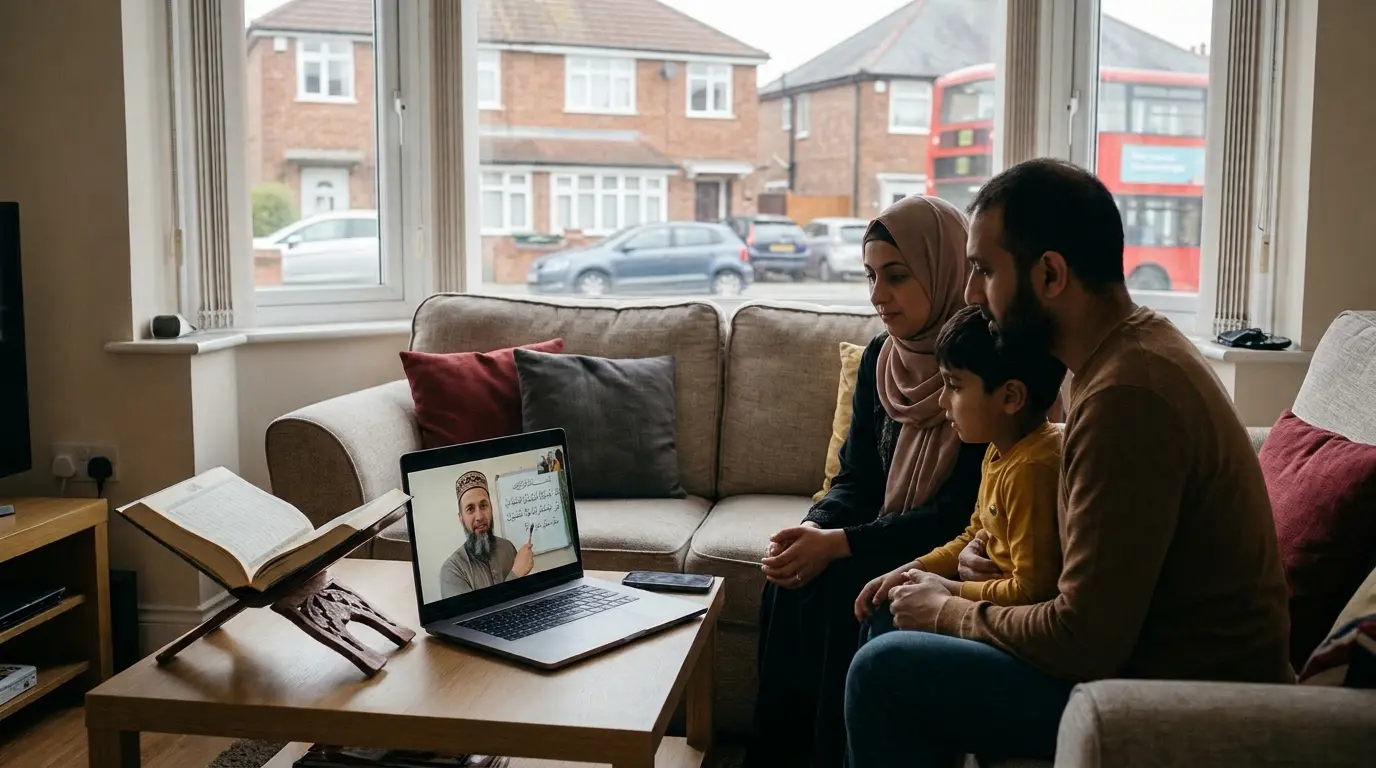
Parents and adult learners across Britain have more choice than ever but also more confusion. This guide explains how to choose the best online Quran classes UK families can trust, from teacher qualifications and class format to fees, safety and free trials, so you can compare academies with confidence and start with the right teacher.
What Makes Online Quran Classes in the UK Trustworthy
Trust is the first filter for online Quran classes in the UK. A polished website says little about what happens inside the lesson, so look for substance instead. The best online Quran classes UK parents and adult learners rely on share the same foundations, and each one is easy to check once you know what to ask.
A teacher you can identify
Good academies introduce the teacher by name, explain their training and let you meet them before you commit. If an academy cannot tell you who will teach your child, treat that as a signal to keep looking.
A curriculum, not improvised lessons
Well-run online Quran classes in the UK move through clear stages: Noorani Qaida for beginners, then fluent reading, Tajweed rules and, where relevant, Hifz. Each stage has goals, so the teacher is not deciding week by week what to cover.
Progress you can actually see.
Ask how progress is tracked and shared. Regular feedback keeps parents and adult learners honest about pace and tells you quickly whether the classes are working.
How we handle this at Rahiq: every course at Rahiq Academy follows a specialised curriculum built on modern educational standards, with separate pathways for adults and for children. No teacher teaches “their own way”. The curriculum belongs to the academy, so a student’s learning stays consistent and measurable from one lesson to the next.
One-to-One vs Group Online Quran Classes in the UK
The right answer to one-to-one vs group online Quran classes depends on the learner, not on which format sounds more impressive. Both can work, and the difference is mostly about how much correction each student receives.
When one-to-one works best
Recitation is personal. A teacher who hears every letter can fix a makhraj (point of articulation) or a Tajweed habit the moment it appears. That matters for beginners, for adults who feel self-conscious about reading aloud, and for anyone memorising. Younger children with short attention spans also tend to do better when the teacher’s attention is entirely on them.
When group classes make sense
Groups can add peer motivation and usually cost less. They suit confident learners who already read fluently and want regular practice. The trade-off is less recitation time per student.
Whichever format you choose, ask how many students share a class and how many minutes each learner actually recites. That number tells you more than the brochure does when weighing one-to-one vs group online Quran classes.
Fitting Online Quran Classes Around UK School Terms and Work
British family life runs on school terms, half-terms, after-school clubs and shift patterns. The practical test for fitting online Quran classes around UK school terms is whether lessons still happen on a busy week, not only on a quiet one.
Weekdays, weekends and holidays
Many families book after-school or early evening slots, while working adults often prefer weekends or early mornings. Half-term and summer holidays are useful for intensive blocks, especially for revision or memorisation. A written plan helps everyone stay consistent, and our Quran memorisation schedule with a free printable tracker is a good place to start.
Time zones and clock changes
The UK clocks change in spring and autumn, and many teachers live in other time zones. Ask how the academy keeps your lesson time stable after a change, so you are not rearranging the week twice a year. Consistency matters when fitting online Quran classes around UK school terms and work.
Teacher Qualifications and Ijazah in Online Quran Classes
Teacher qualifications and ijazah in online Quran classes deserve more scrutiny than almost any other detail. An ijazah is a teacher’s authorisation to teach the Quran, based on a recitation chain (sanad) that traces back through generations of teachers to the Prophet Muhammad ﷺ. In the UK, the most commonly taught recitation is Hafs ‘an ‘Asim. Al-Azhar University in Cairo is widely regarded as a leading centre for Quranic and Islamic sciences.
Questions worth asking
- Where did the teacher study, and which qualification do they hold?
- Do they hold an ijazah, and in which riwayah?
- Have they taught children, or learners who do not speak Arabic?
- Do they explain things clearly in English?
Specialist teachers matter
A strong reciter is not automatically a strong teacher of young children, and teaching a child who finds learning difficult takes patience and a different approach. Women learners may also prefer a female teacher.
How we handle this at Rahiq: all our teachers are qualified through Al-Azhar and hold an ijazah. We also match students to specialists: teachers dedicated to working with children, teachers who support children with learning difficulties, and female teachers for women learners only. The aim is to make teacher qualifications and ijazah in online Quran classes a starting point, not the whole story.
Safety and Supervision in Online Quran Classes for Children
Safety and supervision in online Quran classes for children start with simple things parents can see for themselves. You do not need technical knowledge to spot a well-run lesson.
What parents can check
- You know exactly who the teacher is.
- The lesson runs on a platform the academy sets up, with the camera on.
- Your child learns in a shared family space, with an adult within earshot.
- Communication goes through you or through the academy, not through private messages with the child.
- There is an easy way to raise a concern and get a clear answer.
- Your child sees the same teacher consistently, which builds comfort and trust.
Supervision behind the scenes
Good academies also check their own standards. At Rahiq Academy, quality supervisors regularly observe sessions to review teaching standards and the way teachers interact with students. If anything inappropriate is noticed, it is corrected immediately. Parents should expect that kind of oversight from any provider when thinking about safety and supervision in online Quran classes for children.
How Much Online Quran Classes Cost in the UK
How much online Quran classes cost in the UK varies widely, and the cheapest option is rarely the best value. Price depends on who teaches, how the lesson is structured and what support surrounds it.
What drives the price?
The main factors are teacher qualifications, one-to-one or group format, lesson length and frequency, and whether the academy provides a structured curriculum and progress tracking. A very low hourly rate is worth a question: who is teaching, what training do they have, and is there a curriculum behind the lesson?
At Rahiq Academy, classes start from £7 per hour, with every lesson taught by an Azhar-qualified teacher who holds an ijazah, using a specialised curriculum.
Questions about fees
Before enrolling, ask whether the price is per lesson or per month, how long each lesson lasts, whether there are registration fees and what the cancellation or rescheduling policy is. Clear answers are a good sign when comparing how much online Quran classes cost in the UK.
Using a Free Trial to Compare Online Quran Classes
The most honest way to use a free trial to compare online Quran classes is to treat it as a short interview with the teacher, not a sales demo. Book trials with two or three academies and compare notes afterwards.
What to look for
- Does the teacher explain clearly and correct gently?
- Does your child feel comfortable, or do you, if you are the learner?
- Does the teacher assess your level and suggest a plan?
- Does the technology work smoothly?
Why one session may not be enough
Nerves can dominate a first lesson, especially for children and adult beginners. That is why Rahiq Academy offers two free trial sessions instead of one: the first helps the student settle, and the second gives a fairer picture of the teacher and the curriculum. You can book your free evaluation and decide without pressure after a free trial to compare online Quran classes properly.
Red Flags When Choosing Online Quran Classes
Red flags when choosing online Quran classes are usually visible before you pay. Watch for:
- Promises of completing the Quran or mastering Tajweed in an unrealistic time
- No named teachers or vague answers about qualifications
- No trial lesson or pressure to pay long-term upfront
- No clear curriculum or progress reports
- Teachers asking to move conversations with children to personal social media or messaging accounts
- Little or no communication with parents
If you notice any of these red flags when choosing online Quran classes, ask direct questions before committing.
FAQs
How much do online Quran classes cost in the UK?
Prices vary with teacher qualifications, format and lesson frequency. At Rahiq Academy, classes start from £7 per hour. Always ask what is included before comparing prices.
Can adults and women learn online?
Yes. Adult learners can start from the Arabic letters or from fluent reading, depending on level. Women learners at Rahiq Academy study with female teachers only.
Are online Quran classes as effective as a local madrasah?
They can be, depending on the format. Online lessons offer flexible timing and more individual correction, while a local madrasah or mosque class offers community. Many families combine both.
What age can a child start?
Many academies begin around age five with Noorani Qaida, but readiness varies. A good teacher will judge your child’s attention and comfort, not just their age.
Do I need to speak Arabic?
No. Beginners start with the Arabic alphabet and basic reading rules, taught in English. If you want to go further, our Arabic language courses build on that foundation.
Can children with learning difficulties learn the Quran online?
Yes, with the right support. Rahiq Academy has teachers who work with children with learning difficulties, adapting pace and methods to each child. The best online Quran classes for kids always start with understanding the child.
How often should lessons be?
Most students do two to three lessons a week. Consistency and short daily practice matter more than lesson length.
Conclusion
Knowing how to choose the best online Quran classes UK families can trust comes down to a few checkable things: a qualified teacher with an ijazah, a real curriculum, a lesson format that fits your learner, clear fees, visible supervision and a free trial that lets you decide with confidence. Take your time, ask direct questions and judge each academy by how it answers.
If you would like to see how our programmes work, explore our online Quran courses. Or start with two free trial sessions through our free evaluation and meet your teacher first.
