

Quran Classes for Children with Autism or ADHD in the UK

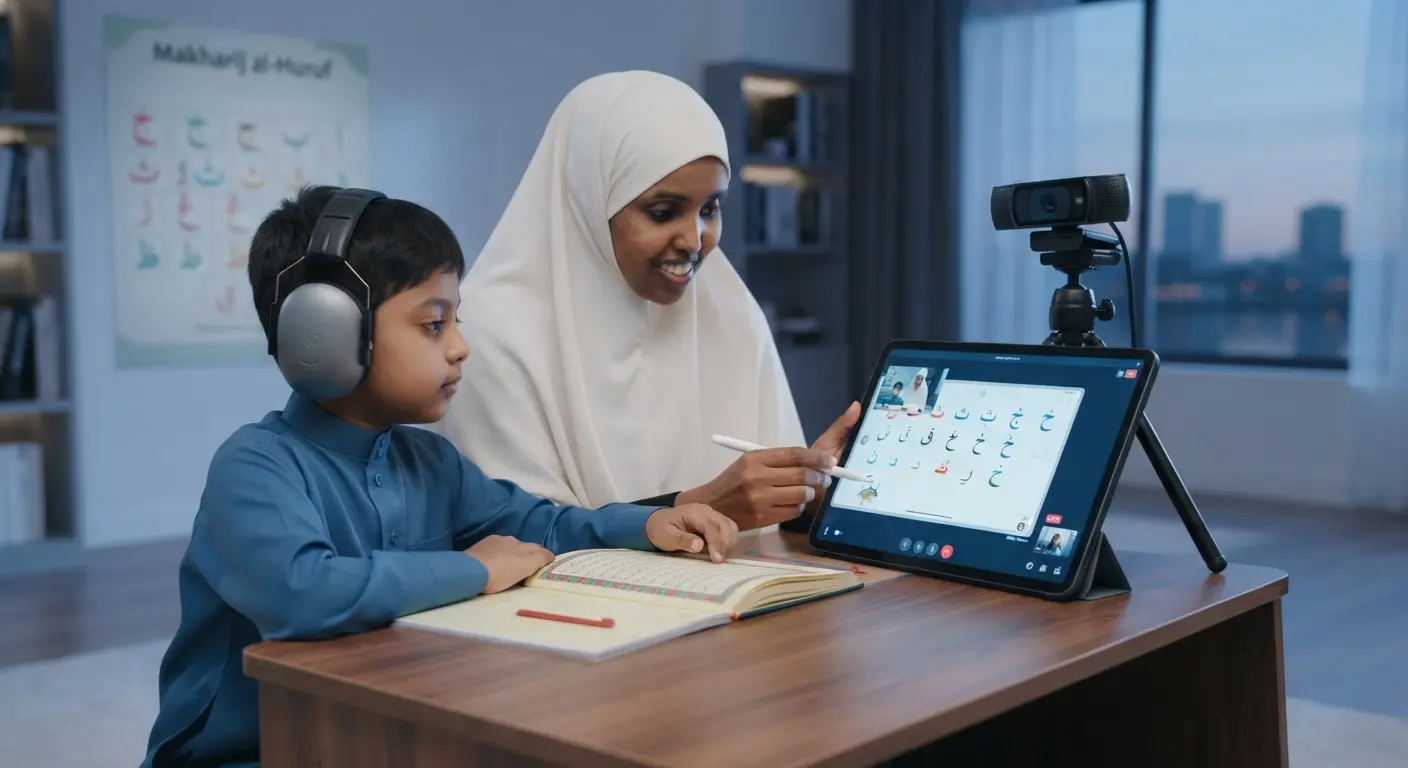
Finding Quran classes for children with autism or ADHD in the UK can feel harder than it should. Many parents find that a busy classroom, with its noise, pace and pressure, simply doesn’t suit their child. The good news is that the lesson can adapt to the child, not the other way round. This guide covers what helps, how to prepare, and what to ask before you commit.
Why Traditional Quran Classes Can Be Hard for Some Children
For some children, traditional Quran classes can be hard for reasons that have nothing to do with ability or love of the Quran. A typical mosque or madrasah evening class often means a large circle, background chatter, waiting for a turn and quick corrections. A child who is sensitive to sound, finds it hard to sit still, or needs to know exactly what happens next may feel overwhelmed before the lesson even reaches the Qaida page. Many madrasahs do wonderful work, and plenty of children thrive there. But if your child comes home tired, anxious or reluctant, it is worth asking whether the format, rather than the child, is the problem.
Why One-to-One Online Quran Classes Can Work Well
For many families, one-to-one online Quran classes can work well because the child learns in a familiar room, in their own chair, with no one else to compete with. There is no travel, no crowded entrance and no sudden change of setting. The teacher can give full attention, slow down when needed and move forward when the child is ready. Parents can stay nearby, which often helps a child settle.
Online learning isn’t perfect for everyone. Some children find screens tiring, and some need more hands-on activity. That is why a trial matters. To see how our one-to-one format works more broadly, you can read about our online Quran classes for kids.
What Helps in a Quran Lesson for Autism and ADHD
Knowing what helps in a Quran lesson starts with remembering that every child is different, and many children have a mix of needs. The ideas below are general starting points, not rules, and you know your child best.
Autism: routine, clarity and visuals
Many autistic children feel safer with a predictable routine. That might mean the same opening in every class, a clear order of activities and a warning before anything changes. Short, literal instructions often work better than long explanations. Visual aids such as Arabic letter cards, a simple picture schedule or colour-coded tajweed charts can make abstract ideas easier to hold on to. A calm voice and a gentle pace matter just as much as the material itself.
ADHD: short segments, movement and quick encouragement
Children with ADHD often do best with variety and momentum. Short segments, a quick change of activity (listen, repeat, trace, then recite) and brief movement breaks can help. Small, clear goals, such as one letter or one short ayah, let a child feel progress straight away. Immediate, specific encouragement usually works better than correction alone.
How to Prepare Your Child and the Teacher Before the First Class
A little preparation before the first class makes a big difference to how comfortable your child feels. Tell the teacher what calms your child, what overwhelms them, how they communicate and which time of day suits them best. After school, or straight after therapy, can be too tiring for some children. Mention favourite interests and rewards, and whether your child prefers to have a parent in the room. If your child has an Education, Health and Care Plan (EHCP) or a support plan at school, the strategies in it are a good starting point to share.
For your child, a short preview helps. Tell them the teacher’s name, how long the lesson will last and what will happen first. Choose a quiet room, switch off other screens and keep a drink or comfort item close.
How We Support Children with Autism or ADHD at Rahiq Academy
At Rahiq Academy, we support children with autism or ADHD by starting with the child, not the curriculum. Teachers are chosen for their patience, and before the first lesson they are briefed on your child’s needs so they know how to respond from the start. Lessons are one-to-one with Azhar-qualified teachers who hold ijazah, and girls can learn with female teachers. Quality monitors also sit in on classes from time to time to check teaching standards and how teachers treat students. Fees start from £7 per hour, and two free trial sessions let you see the fit before you commit.
Our teachers are Quran teachers rather than therapists, so we work alongside the support your child already has at school or elsewhere. Progress looks different for every child, and we focus on small, steady steps rather than fixed timelines.
How to Use Two Free Trial Sessions to Check the Fit
The best way to judge the fit is to use two free trial sessions as a gentle test rather than a performance. In the first session, keep things short and low pressure. Your child doesn’t need to read anything; they are simply meeting the teacher. Notice whether the teacher speaks calmly, gives your child time to respond and adjusts when something isn’t working.
In the second session, try a more typical lesson routine and see whether your child recognises it and settles faster. Good signs include your child being willing to log in again, the teacher adapting to your feedback and your child finishing the lesson calmer. Warning signs include a rushed pace, a raised voice or a teacher who doesn’t listen to what you have shared.
FAQs
Q: What age can my child start?
A: There is no single right age. What matters is whether your child can take part in a short, supported session. Share your child’s age and needs when you book a free trial and we will talk through what suits them.
Q: How long should each lesson be?
A: Shorter lessons with a break often work better for children who tire quickly or find it hard to focus. Lesson length is something to discuss with the teacher during the trial sessions.
Q: Can I sit in during the lesson?
A: Parents are welcome to stay nearby, especially at the start. A familiar adult can help a child settle, and you can step back as their confidence grows.
Q: Can my daughter learn with a female teacher?
A: Yes. Female teachers are available for girls.
Q: Who will teach my child, and how are they prepared?
A: Teachers are chosen for their patience and are briefed on your child’s needs before the first class. You can share what works for your child at any point, and the free trial sessions help you check the fit.
Q: How much do the classes cost?
A: Fees start from £7 per hour. The exact cost depends on the course and schedule, so please check our site or ask us when you book a free trial.
Q: Will my child learn to read the Quran?
A: Many children make steady progress when the pace suits them, starting with Arabic letters and short surahs. Progress looks different for every child, so we focus on small, achievable steps rather than fixed timelines.
Q: Are online classes as effective as classes in a mosque?
A: It depends on the child. Some children learn better at home with one-to-one attention, while others prefer a group setting. The free trial sessions are a low-risk way to find out.
Finding the Right Quran Classes for Children with Autism or ADHD in the UK
Choosing the right Quran classes for your child is easier when you know what to look for: a patient teacher, a calm routine, a pace that follows your child and honesty about what a class can and can’t do. Quran classes for children with autism or ADHD in the UK don’t need to look the same for every family, and the best fit is the one your child feels safe in. Once your child is settled, a simple routine can help, and our Quran memorization schedule is a useful place to start.
If you’d like to see whether we are the right fit, book your free trial and meet a teacher with no pressure. You can also explore all of our courses.
