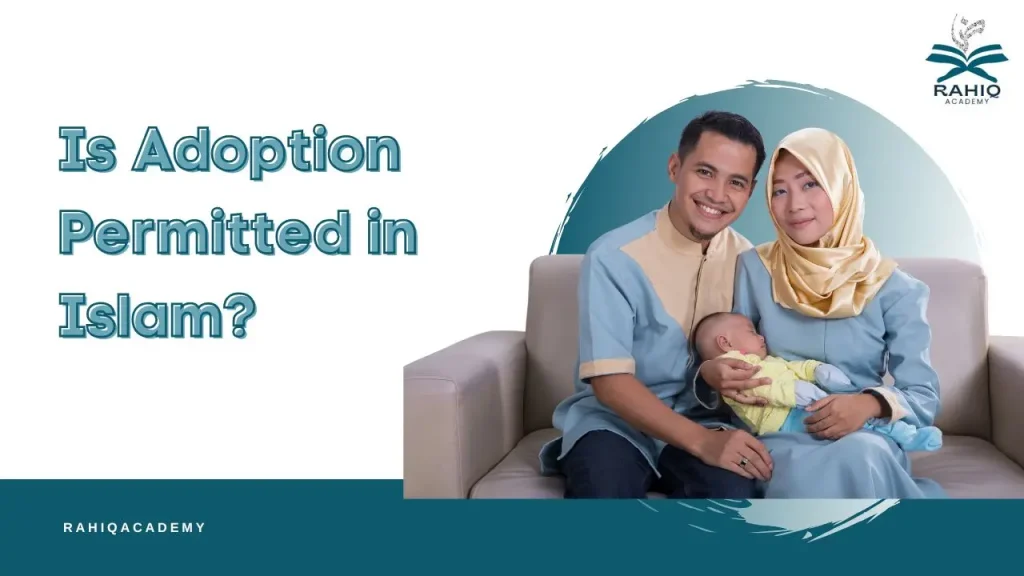
Is adoption permitted in Islam? Yes. Islam allows lifelong care through kafalah while it forbids changing lineage, name, or inheritance rights.
This balance protects truth, justice, and mercy. As a result, Muslim families can raise and love a child without erasing identity.
Is adoption permitted in Islam?
Islam permits guardianship that gives a child full care, safety, and dignity without altering biological identity.
This ruling comes directly from Quran 33:5 and confirmed scholarly consensus.
Through this system, families provide love and stability while preserving lineage, inheritance law, and social justice.
What Is and Is Not Allowed
What is and is not allowed in Islamic adoption is simple and clear. Islam allows full care through kafalah, but blocks any action that hides or changes the child’s real identity. This rule protects both mercy and truth.
Allowed actions in Islamic guardianship
- Give food, shelter, and emotional support
- Raise the child with kindness and honesty
- Teach Quran, manners, and daily values
- Share your wealth as a gift or in a will
- Build love without breaking identity rules
These actions earn great spiritual reward.
The Prophet ﷺ promised closeness in Paradise for the one who cares for an orphan.
Not allowed under Sharia:
- Claim biological parenthood
- Change the child’s name or lineage
- Give automatic inheritance like a blood heir
- Ignore hijab and mahram rules after puberty
Why Truth Comes First
The child must grow with safety and real knowledge. When you follow these rules, you protect their rights and your family’s peace. Islamic guardianship respects the child’s future without changing their origin.
| Action | Allowed in Islam | Notes |
| Raise an orphan | Yes | Lineage must stay clear |
| Financial support | Yes | Deeply encouraged |
| Change family name | No | Breaks Quranic instruction |
| Act as a birth parent legally | No | Forbidden under Islamic law |
The Quran commands believers to call children by their real fathers when known
This rule appears in Surah Al-Ahzab 33:5. Therefore, the truth of lineage remains a sacred protection.
Scholars Agree on This Ruling
Scholars share one clear judgment across time.
They allow lifelong care for a child, yet they forbid any change to lineage.
So Islamic guardianship protects mercy and truth together.
- Ibn Qudamah explained in Al‑Mughni that caring for a child brings reward.
However, he stressed that lineage must remain unchanged.
Therefore, guardianship stays lawful, while false parenthood stays forbidden. - Al‑Nawawi also highlighted this balance.
He encouraged mercy toward orphans and children in need.
At the same time, he required honesty in names, inheritance, and family identity.
Thus, compassion and justice remain united in Islamic law. - Modern fatwa councils repeat the same ruling today.
They permit lifelong care through kafalah.
But they block Tabanni that replaces the real family line.
They also advise clear records, honest naming, and support through gifts or a will.
Is adoption permitted in Islam? Yes—through kafalah that protects identity, lineage, and Sharia. This ruling stands on the Quran, authentic Sunnah, and the consensus of scholars across generations.
Therefore, Muslim families can raise a child with full love while keeping the truth clear and rights preserved.
This agreement forms one firm principle. You may love, raise, and protect a child completely. Yet you must always keep the child’s true identity known and honored.
Permanent Adoption (Western Style) in Islam
Is adoption permitted in Islam? Yes, but only within limits. The Quran commands clarity, so the child’s real name stays protected. That’s why permanent adoption (Western style) in Islam is not allowed in its full legal form.
Western systems often change names, erase birth records, and treat the child as born to the new parents. This breaks Islamic rules that protect truth and inheritance. Instead, Islam promotes kafalah, a system of care that preserves identity.
Here’s what Islamic law allows
- Daily care, housing, and emotional support
- Raising the child with fairness and dignity
- Writing a will to support the child financially
- Keeping birth names and documents untouched
Avoid the following actions:
- Changing the child’s surname
- Claiming parenthood in official papers
- Hiding the child’s original family story
Islam rejects this specific model. Classical jurists called it tabanni. The Quran ended this practice to prevent confusion in:
- inheritance rights
- marriage eligibility
- family identity
- social justice
So Islam blocks identity replacement, not compassion.
Islam blends compassion with truth. Through kafalah, families give love while honoring the child’s roots. This is the balanced way to raise a child under Islamic guidance.
Tabanni vs Kafalah
| Feature | Kafalah (Allowed) | Tabanni (Not Allowed) |
| Lineage | Preserved | Rewritten |
| Legal Parent Status | Guardian only | Treated as a biological parent |
| Inheritance | By will or gift | As blood heir |
| Mahram Ties | Not automatic | Misleading |
| Emotional Care | Fully allowed | Not the issue |
| Sharia Compliance | Permitted and encouraged | Forbidden under the Quran (33:5) |
The Islamic solution: kafalah guardianship
Kafalah is the Islamic way to raise a child with full care and full truth. You sponsor the child for life.
As a result, you stay a guardian. Also, you do not claim biological parenthood.
Through kafalah, Muslim families give full care without changing identity.
Tabanni, however, rewrites lineage and is blocked under Sharia.
Therefore, you can build a Sharia-compliant home through guardianship, clear records plus a will that supports the child.
Kafalah gives the child safety and stability.
At the same time, Kafalah keeps its identity clear.
So the child keeps the original name and ancestry.
Also, the child keeps known family links.
Key features of kafalah
- The child keeps the original name and ancestry. So lineage stays clear for life.
- You provide full financial support. So you cover food, housing, school, and health care.
- You provide full emotional support. So you build routine, trust, and belonging.
- Your role remains clear to society. So people see you as a guardian, not a birth parent.
- Islamic inheritance rules stay protected. So fixed heirs keep their shares. Yet you can still support the child through a will.
- Islamic marriage rules stay protected. So mahram lines stay correct.
Then, future marriage limits stay clear.
Because this balance protects mercy and law, scholars permit kafalah.
Also, scholars encourage it as a strong act of care.
Key Rules in Islamic Guardianship
Islamic guardianship involves specific rules regarding family boundaries and property. These rules protect the rights of both the child and the guardian family. Because the child is not a biological relative, certain boundaries exist that do not exist with birth children.
Mahram and Hijab Rules
- A child raised through Kafalah does not automatically become a Mahram (a close relative who cannot be married).
- This means that once the child reaches puberty, they must observe the rules of Hijab with members of the opposite sex in the house.
- For example, an adopted son would need to follow modesty rules around his adoptive mother and sisters.
- This can be a challenge for many families, but it is a requirement of the faith to maintain social boundaries.
Inheritance Rights
- In Islam, an adopted child does not automatically inherit from the adoptive parents as a biological child does.
- Their right to inherit remains with their biological family. However, you can choose to give them a Wasiyyah (bequest). You are allowed to leave up to one-third of your estate to the child in your will.
- This ensures they are financially secure after you pass away. It is a way to show your love and provide for their future, even though they are not legal heirs by blood.
How to Adopt Legally in Western & Muslim Countries
Adopting as a Muslim in a Western country requires careful legal planning. Many Western laws require the child to take the parent’s last name. You can comply with the law while still following Islamic rules. You must balance the civil law of your country with the spiritual law of your faith.
- Legal Name: You may use your last name for legal documents, but tell the child their real father’s name.
- Transparency: Keep records of their biological family to share with the child later.
- Kafalah Paperwork: In Muslim countries, you apply for a Kafalah certificate rather than an adoption decree.
- Legal Counsel: Always consult a lawyer who understands both local law and Islamic principles.
In many Western nations, Foster-to-Adopt is a common path. This often aligns well with Kafalah because the child stays in the foster system legally while living in your home. You can provide a permanent home while the state recognizes you as the guardian. This allows you to fulfill the spiritual requirement of protecting the child’s lineage.
Adopting Orphans and Children in Need
Is adoption permitted in Islam? Yes—if it protects the child’s identity and follows Sharia.
The Prophet (peace be upon him) was an orphan. He promised closeness in Paradise for those who care for orphans. This care is among the most loved acts in Islam.
You can help in two ways:
- Support a child in an orphanage
- Bring them into your home through guardianship
Each option offers mercy and reward.
Some children come from war zones. Others have lost parents or suffer neglect. So they need a safe, loving Muslim home.
Giving them care is a form of Sadaqah Jariyah. That means the reward continues after you’re gone.
You shape their faith and future. You give them hope. And you earn a lasting reward.
This care reflects mercy with truth. It honors both the child and the Deen.
Foster Breastfeeding (Rada‘ah) to Create Mahram Ties
Rada‘ah makes the child a mahram if done before age two.
This allows closeness without hijab rules and keeps lineage safe.
It is the best Islamic way to ease home life after kafalah.
- Rada‘ah means breastfeeding a child before they turn two.
This creates a milk bond like kinship.
The child becomes a mahram to the nursing woman and her husband. - So, hijab rules no longer apply inside the home.
Also, the child cannot marry the woman’s biological children.
That’s why many Muslim families use rada‘ah in adoption cases. - To be valid, the child must drink enough milk.
Most scholars agree that this must happen five times or more.
Families often ask a scholar for exact rules. - Sometimes, the mother uses a pump or lactation help.
This helps create the bond without confusion.
The child gains full care without a false identity. - Rada‘ah offers a loving and lawful bond.
It gives both peace and clear Islamic boundaries.
And it reflects the mercy of Islam in family care.
Can a Muslim Couple “Adopt” a Child Today?
Yes. Islam allows lifelong care through kafalah while it protects lineage and truth. So families may raise, love, and support a child without claiming false parenthood.
This balance keeps mercy strong and Islamic law clear for every home.
Many couples ask this question when hope meets faith. They want family, yet they also want clear guidance. So the answer must stay simple, honest, and complete.
Is adoption permitted in Islam?
Yes for guardianship care, but not for identity change. This rule protects the child and the family together.
A trusted path appears through Islamic child guardianship.
It gives stability, safety, and emotional belonging.
At the same time, it keeps the real names and family lines known.
Therefore, love grows without confusion or hidden truth.
What can Muslim families do today?
- Provide a safe and caring home
- Support school, health, and daily needs
- Build faith, manners, and confidence
- Give financial help through gifts or a will
- Keep lineage clear in all records
Each step joins mercy with responsibility. Also, each action reflects Prophetic guidance on orphan care. So the home becomes a place of trust and growth.
Families who follow this path gain peace. Children who live in this care gain dignity and hope. And the community gains stronger, faithful generations.
How to Love and Raise an Adopted Child Islamically
Raising an adopted child requires honesty and deep compassion. You should treat them with the same kindness and discipline as any other child. Children are very perceptive and need to feel secure in their position in the family.
- Tell them they are adopted at an early age, so it is not a shock.
- Speak about their biological parents with respect and kindness.
- Ensure they understand their value in your heart and in the eyes of Allah.
- Focus on their Islamic education (Tarbiyah) to build their character.
It is helpful to connect with other Muslim adoptive families. They can offer advice on how to handle difficult questions from the child. Is adoption permitted in Islam? That’s the question many parents ask—and the answer shapes how you raise with both care and clarity.
You are not just a provider; you are a mentor and a guide. Your goal is to raise a confident Muslim who knows they are loved by both their birth family and their guardian family.
The Social Importance of Kafalah
In the modern world, the number of displaced children is rising. Conflict and poverty leave many without parents.
- The Muslim community has a duty to step up. When we ask is adoption permitted in Islam, we are really asking how we can serve the most vulnerable.
- By practicing Kafalah, we strengthen the social fabric of the Ummah. We prevent children from being lost to systems that might not respect their faith.
- We ensure that every child has a Kafil who cares for their soul as much as their body. This is the true essence of Islamic social justice.
Summary
Is adoption permitted in Islam? is answered not by theory but by action. Islam lets you care, love, and protect — without hiding the truth of lineage. So raise a child with faith, not fiction. Learn the full ruling, take the next step, and explore deeper guidance at Rahiq Academy. This is your call to learn, give, and grow with purpose. Every child deserves both care and clarity. Start today, the right way.
FAQ’s
Q:Is Adoption Haram in Islam?
A:Adoption becomes forbidden only when it changes lineage or identity.
Guardianship care through kafalah remains lawful and rewarded.
Q:Can a Muslim Adopt a Child of the Opposite Gender?
A:Yes. However, modesty rules apply after puberty unless foster breastfeeding created mahram ties.
Q:Does an adopted child inherit?
A:Not automatically. But guardians may give gifts or a bequest up to one-third of their estate.
Q:Why does Islam protect lineage so strongly?
A:Because lineage affects inheritance, marriage, and justice.
Preserving truth prevents long-term social harm.
Q:Can I Give My Last Name to an Adopted Child?
A:You may use your surname legally, but the child’s real biological name must remain known and preserved.