
Online Islamic Studies Classes for Every Age and Learning Level

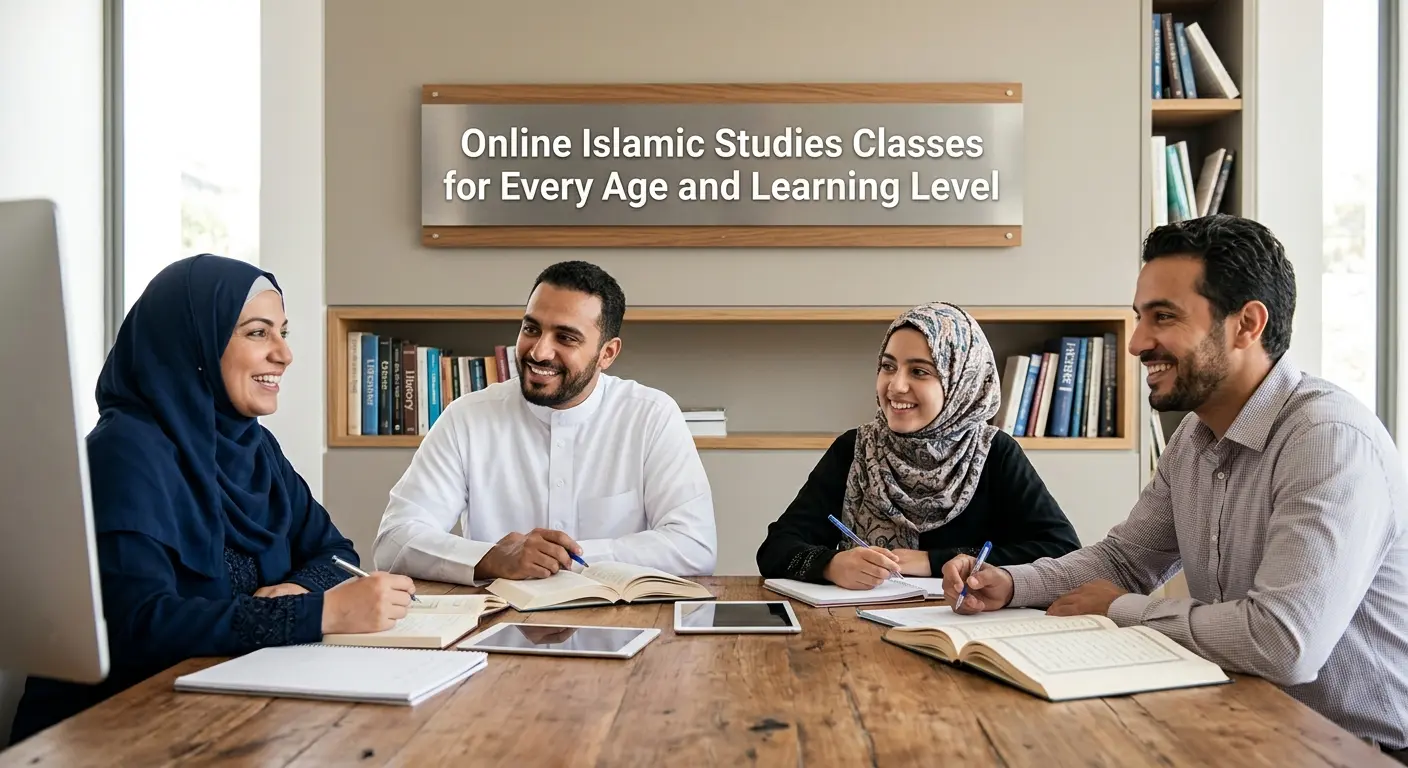
For Muslims living outside the Arab world, Islamic knowledge can feel distant—especially when finding structured, quality Islamic education is challenging. Online Islamic studies classes for every age and learning level now bridge this gap, making authentic Islamic learning accessible to children, teenagers, adults, and entire families regardless of location. Whether your child needs to understand the Five Pillars, you want to deepen your knowledge of Fiqh, or your family seeks to learn Islamic values together, live expert instruction tailored to your pace transforms disconnected knowledge into meaningful, actionable faith. This guide explores how to choose the right Islamic studies program for your specific needs and age group.
1. Islamic Studies Classes for Children (Ages 5-10)
Young learners thrive on interactive, story-based learning, which is why Islamic studies classes for children focus heavily on Quranic narratives, the lives of the Prophets, and practical Islamic manners. At this age, children absorb concepts through engagement—not lectures.
Classes at this level typically cover Arabic letter recognition, memorization of short Surahs, basic Wudu and Salah instruction, and character-building stories that embed Islamic values naturally.
Certified instructors specializing in child development know how to break complex concepts (like Tawheed) into age-appropriate explanations, often using visuals, repetition, and praise to build confidence.
A typical session for this age runs 20-30 minutes to match attention spans, with progress tracked through simple milestones like “completed Surah An-Nas” or “memorized the five daily prayers.”
2. Islamic Studies for Teenagers (Ages 11-17)
Adolescence brings deeper questions about identity and belonging, making Islamic studies for teenagers crucial for preserving Islamic identity in multi-faith environments. Teenage learners need more intellectual rigor than younger children but without the abstract complexity of adult theological study.
Classes at this level explore Fiqh issues relevant to teenagers (Islamic perspective on friendship, online behavior, dress codes), stories of young Sahaba who changed history, and modern applications of Hadith wisdom.
Teen-focused instructors understand the psychological shifts of adolescence and structure lessons to feel relevant—not preachy. Many programs introduce basic Tafseer, Seerah of the Prophet in greater depth, and discussion-based learning where teenagers voice questions and concerns. This builds not just knowledge but Islamic agency.
3. Islamic Studies Classes for Adults
Adults pursue Islamic education for various reasons: deepening faith after years of neglect, understanding Islam post-conversion, or seeking scholarly knowledge. Islamic studies classes for adults accommodate all these motivations with structured pathways. Beginner-level adults start with foundational Aqeedah (the Six Pillars of Faith), practical Fiqh of worship, and Seerah as biography and moral instruction.
Intermediate learners study the 40 Hadith Nawawi with classical commentary, advanced Fiqh issues (Islamic finance, family law, contemporary ethics), and Quranic Tafseer. Advanced students engage with theological texts, Hadith methodology, and jurisprudential disagreements across different schools of Islamic law. Adult classes typically run 45-60 minutes, allowing deeper exploration and Q&A space for complex questions about living Islam in secular societies.
4. Islamic Studies for Entire Families
Learning Islam shouldn’t fragment families—it should unite them. Islamic studies for entire families recognize that parents and children benefit from shared Islamic knowledge and conversation. Some programs offer family bundles where parents take one course (Fiqh of Marriage and Parenting) while children take age-appropriate Islamic basics simultaneously, creating natural dinner-table discussions about what each learned.
Other families prefer unified courses where a single teacher guides everyone through a Surah or Seerah story, with the instructor adjusting depth so each age level stays engaged. Family-based learning creates accountability (everyone’s practicing together), builds Islamic home culture organically, and strengthens family bonds through shared spiritual purpose.
5. Fiqh Classes: Practical Islamic Jurisprudence
Beyond abstract theology, Muslims need to know how to practice Islam correctly. Fiqh classes teach the practical jurisprudence of worship—how to perform Wudu with proper water usage, what invalidates Salah, when fasting is obligatory or recommended, how to calculate and give Zakat, and the rituals of Hajj. For adults, Fiqh classes often expand into contemporary issues: Islamic perspectives on finances and investments, women’s roles in Islamic law, permissibility of modern technology, and ethical guidance for workplace dilemmas.
Certified Fiqh instructors typically specialize in one or two schools of Islamic law (Hanafi, Maliki, Shafi’i, Hanbali), teaching students not just rules but the reasoning behind them—deepening understanding beyond rote memorization. This transforms Fiqh from a checklist of dos-and-don’ts into a cohesive ethical framework.
6. Aqeedah (Islamic Creed) Classes: Building Core Beliefs
Before learning Islamic law, Muslims should anchor themselves in core Islamic beliefs. Aqeedah classes establish the theological foundation: the oneness of Allah (Tawheed), the prophethood of Muhammad, the reality of the Day of Judgment, divine decree, and the nature of angels. This isn’t dry doctrine—proper Aqeedah transforms how Muslims see the world.
Understanding Tawheed shifts a believer’s fear from people to Allah alone, fundamentally reshaping behavior and decision-making. Aqeedah classes for children emphasize the Names and Attributes of Allah and stories of the Prophets; for adults, they often include classical texts like the Aqeedah Tahawiyyah and engagement with common theological questions that arise in Western secular environments. Strong Aqeedah becomes the anchor during doubt and crisis.
7. Seerah Classes: Life Lessons From the Prophet
The life of Prophet Muhammad is Islam’s primary case study for righteous living. Seerah classes go beyond historical narrative—they extract practical wisdom from each phase of the Prophet’s life. Young learners hear age-appropriate stories; adults study the Seerah chronologically, analyzing the Prophet’s leadership during hardship, his business ethics, his family relationships, and his diplomatic wisdom. Seerah teachers highlight how the Prophet navigated challenges strikingly similar to modern Muslim struggles: maintaining faith in secular societies, raising children with strong values, building community from scratch, and responding to opposition with integrity. By studying the Prophet’s example methodically, students gain a living, practical model for Islamic adulthood rather than abstract ideals.
8. Hadith Classes: Authentic Islamic Traditions
The Hadith (sayings and practices of Prophet Muhammad) provides the second pillar of Islamic jurisprudence and character development. Hadith classes introduce students to the most accessible collections—especially the 40 Hadith Nawawi, a classical compilation of Hadith with profound wisdom. Beyond memorization, instructors teach Hadith methodology: how scholars authenticate chains of narration, distinguish between different levels of Hadith reliability, and extract legal and ethical principles from each tradition.
Studying Hadith reveals the Prophet’s practical guidance on topics from business conduct to kindness to parents to environmental stewardship. Advanced Hadith classes introduce students to Hadith sciences (Mustalah al-Hadith), deepening scholarly understanding. This bridges the gap between knowing Islam’s rules and understanding its spirit.
9. Certified Teachers With Deep Specializations
Not all Islamic instructors are equal, and learners deserve to know who’s teaching them. Certified teachers with deep specializations bring credentials and expertise that generic instruction cannot match. Top-tier Islamic studies programs employ teachers with formal Islamic degrees (from Al-Azhar, Islamic University of Medina, or equivalent institutions), Ijazah certifications in Quran recitation or Hadith transmission, and specialized training in child development, adolescent psychology, or adult education.
A Fiqh specialist knows not just rules but jurisprudential reasoning; a Seerah expert integrates historical context and ethical application; a teacher specializing in teens understands identity formation and speaks their language.
When you enroll in an Islamic studies class, you’re investing in expertise—ask about your instructor’s background, qualifications, and teaching experience. This separates transformative learning from surface-level information.
10. Personalized Level Assessment From Day One
One common failure in online Islamic education is mismatched levels—placing an advanced learner with beginners or vice versa. Personalized level assessment from day one prevents this. Quality programs begin with a diagnostic conversation or brief quiz: What’s your Arabic reading level? Have you studied Islamic theology before? What specific topics interest you? What are your learning goals?
Based on these answers, instructors place students in the appropriate track—not too easy (boring, wasting time) or too difficult (frustrating, discouraging).
This tailored placement ensures every class session builds on prior knowledge, maintains engagement, and produces measurable progress. Many programs also offer progress reviews every 4-6 weeks, adjusting pace and content if needed. This responsiveness is what distinguishes personalized learning from rigid curriculums.
11. Flexible Scheduling Across All Time Zones
Life doesn’t fit a single time slot—neither should Islamic education. Flexible scheduling across all time zones means classes run mornings, afternoons, evenings, and weekends to accommodate working professionals, school schedules, shift work, and global distribution. Whether you’re in North America, Europe, Asia, Africa, or Australia, you’ll find class times that work.
Many programs also offer recorded sessions so if you miss a live class, you can catch up asynchronously without falling behind the cohort. This flexibility transforms Islamic education from a rigid madrasa schedule into something sustainable for modern life. Parents can study while their children learn. Professionals can take evening classes after work. Busy schedules no longer become excuses for disconnection from Islamic knowledge.
12. What Sets Our Islamic Studies Classes Apart
Choosing an Islamic studies program isn’t just about curriculum—it’s about trust, outcomes, and support.
•Top programs distinguish themselves through several commitments.
•expert instructors with verifiable qualifications
•personalized learning pathways rather than one-size-fits-all approaches
•progress tracking and regular feedback
•flexible scheduling without rigid commitments and genuine community support.
•Programs serious about student outcomes offer satisfaction guarantees.
•transparent pricing
•clear communication
They match learners with instructors thoughtfully, accommodate different learning styles (visual, auditory, kinesthetic), and create psychologically safe spaces for asking questions without judgment. An Islamic studies program reflects not just what it teaches but how it values each learner’s journey. Seek out programs that invest in your success beyond enrollment.
13. How to Start Your Islamic Studies Journey
Beginning Islamic studies feels simpler than many imagine. Most programs offer a free trial or consultation
•Book a call or attend a sample class
•Meet an instructor.
•Discuss your goals, and explore if the fit feels right.
From there, enrollment typically takes minutes—choose your course, confirm your schedule, and receive access to class materials and your instructor’s contact information.
The first actual session is often lighter—introduction, learning goals check-in, pace adjustment discussion—allowing both student and instructor to calibrate expectations. Serious programs provide a welcome package with a study plan, resource recommendations, and clear progression milestones so you know exactly what to expect over the first month. Starting doesn’t require religious perfection or prior knowledge; it only requires sincere intention and willingness to show up consistently.
14. Measuring Real Progress in Islamic Knowledge
How do you know if you’re actually learning? Measuring real progress looks different from academic test scores. Progress might mean:
•your child independently performing Wudu without reminders
•You’re making Dua with a deeper understanding of who you’re addressing.
•your family discussing Islamic values at the dinner table
•noticeable behavioral shifts toward compassion or honesty
•ability to explain core concepts to others
•simply feeling closer to your faith than before.
Many programs track progress through milestones (memorizing Surah X, completing a Fiqh module) and periodic assessments. Monthly check-ins with your instructor reveal progress you might not notice yourself—improved Arabic pronunciation, deeper theological understanding, or shifts in how you apply
Islamic wisdom to daily challenges. Real progress isn’t dramatic overnight change; it’s gradual, consistent, and deeply personal. Trust the process and celebrate small wins.
FAQs
Q: What age should my child start Islamic studies?
A: Children aged 5-6 can begin with foundational Islamic studies focusing on Arabic letters, short Surahs, and basic manners. Some programs accept younger learners (3-4) for highly visual, play-based introduction. There’s no upper age limit—adults often find Islamic studies more meaningful than when younger.
Q: Do I need to speak Arabic to benefit from Islamic studies classes?
A: Not at all. Islamic studies classes for non-Arabic speakers use transliteration, English explanations, and audio recitations to make content accessible. Many instructors specifically train to teach non-native speakers. Over time, some Arabic naturally enters your vocabulary, but it’s never a prerequisite.
Q: How long before I see real results?
A: Small shifts (understanding concepts you always wondered about, children asking deeper questions) appear within 4-6 weeks of consistent attendance. Behavioral changes and measurable progress in knowledge take 3-4 months. Most transformation happens when learners commit beyond 6 months—that’s when Islam truly becomes integrated into daily thinking and choices.
Q: What if my child loses interest after a few classes?
A: Interest fluctuates, especially for teens. A skilled instructor recognizes this and adjusts approach—maybe the topic needs fresher framing, the pace needs adjustment, or the child has underlying concerns worth addressing. Communication between parent, child, and instructor usually reignites engagement. Some programs offer a satisfaction guarantee allowing change of instructors or courses if the fit isn’t right.
Q: Can adults and children learn together in the same class?
A: Most effective Islamic studies distinguish age groups for curriculum relevance, but family bundle programs pair them: parent takes one course while child takes age-appropriate instruction simultaneously, creating shared Islamic values without mismatched content. Some specialized family courses intentionally blend ages—the instructor adapts depth so each benefits.
Q: Do I need long-term commitment, or can I try one month?
A: Most reputable programs offer flexibility—no multi-year contracts, but consistent monthly commitment yields best results. A single month provides introduction and foundation; 3 months shows real progress; 6+ months builds transformative change. Frame it as investment in your or your child’s spiritual foundation, not a temporary hobby.
Conclusion
Online Islamic studies classes for every age and learning level transform Islamic knowledge from distant abstraction into lived practice. Whether your child is building faith foundations, you’re deepening adult understanding, or your family is learning together, structured expert instruction—personalized to your level and flexible around your life—makes authentic Islamic education finally accessible.
Your Islamic journey starts with a single conversation. Book your free class today to discover your ideal Islamic studies pathway.
