
How to Teach Seerah to Your Children

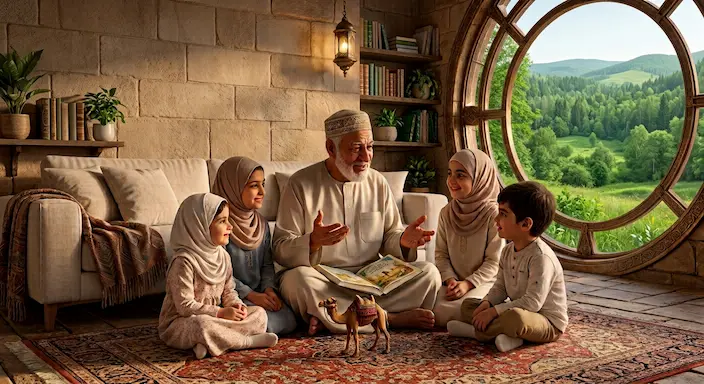
Many parents want to teach Seerah to their children but freeze at the first question: where do I even start? If you only know the famous scenes, you are not alone. Knowing how to teach Seerah to your children does not require scholarly training. It requires a clear order, age-appropriate stories, and a few steady habits. This guide walks you through all three.
Learn the Shape of the Story Before You Teach It
To learn the shape of the story before you teach it, you do not need to be a scholar, but you do need to see the whole arc first. The word Seerah comes from an Arabic root meaning journey or path, and children follow it best as one journey rather than a pile of separate stories: pre-Islamic Mecca, the first revelation, the years of patience in Mecca, the Hijrah, life in Medina, the Treaty of Hudaybiyyah, the return to Mecca, and the Farewell Sermon. Spend a week reading a short, reliable biography before you start. If your child asks something you cannot answer, say “let’s find out together.” That honesty teaches more than a perfect answer.
How to Teach Seerah to Your Children by Age
Knowing how to teach Seerah to your children by age makes the difference between a lesson that sticks and one that bores them. Seerah for children works best when the story is pitched to their stage, not watered down until the point disappears.
Ages 5–7: One Story, One Quality
Keep each story to about ten minutes and build it around one quality: honesty in the story of Al-Amin, patience in the early years in Mecca, or care for orphans and the vulnerable. Use simple words and pictures, and let your child ask for their favorites again and again. Skip graphic details. At this age, the goal is love and familiarity.
Ages 8–11: Connect Cause and Effect
Now add the timeline. Draw it on paper or use a wall map. Ask why the Prophet ﷺ migrated to Medina, what changed after the Hijrah, and why Hudaybiyyah mattered. Children at this age enjoy asking “what happened next, and why?”
Ages 12 and Up: Ask Why
Teenagers want reasons. Discuss how the Prophet ﷺ handled pressure, conflict, and leadership, and connect events to the verses revealed around them. Let your teen present a chapter to the family.
Build a Simple Routine for Teaching Seerah at Home
To build a simple routine for teaching Seerah at home, remember that consistency matters more than length. Pick one short weekly slot, such as after Maghrib on a weekend, and follow the same pattern each time:
- Tell the story in your own words, without reading it flat.
- Ask one question, such as “What would you have done?”
- Add one activity: draw the scene, trace the route on a map, or act it out.
- Link it to today: where can we show the same honesty or patience this week?
When your child asks about the Prophet’s family, wives, or daughters, our guide to the life story of Prophet Mohammed covers those details, so you do not have to repeat them here. For more ideas on passing faith to the next generation, see our article on raising Muslim children in the West.
Mistakes to Avoid When You Teach Seerah to Your Children
These are the mistakes to avoid when you teach Seerah to your children, and most of them come from good intentions:
- Starting with battles. Begin with character and mercy, and bring in the hard events when your child is older.
- Turning it into a quiz. Dates and names matter less than understanding why events happened.
- Teaching only the highlights. The cave and the migration make sense only with what came before and after.
- Brushing off questions. A child who asks “why?” is engaging with the story. Welcome it.
When a Teacher Can Help
Knowing when a teacher can help is part of good parenting. Some parents want a guide beside them, especially if their own knowledge feels patchy. In our online Seerah course, Al-Azhar certified tutors teach the story in order, with storytelling and visuals for children and deeper analysis for older learners. Many families even study the same chapter and discuss it together. You can start with a free trial lesson to see the pace.
FAQs
Q: What age should I start teaching Seerah to my child?
A: Many families begin around ages 4–5 with very short stories about character. You can deepen the content as your child grows.
Q: What is the best way to teach Seerah to kids at home?
A: Teach it in chronological order, one short story at a time, with a question and a simple activity after each.
Q: Do I need to know Arabic to teach Seerah?
A: No. Learn the key Arabic terms and names as they come up, and teach in the language your child understands best.
Q: How long should a Seerah lesson be?
A: About 10–15 minutes for young children and 20–30 minutes for older children and teens.
Q: Should I teach the battles to young children?
A: Not in detail. Focus on mercy, patience, and justice first, and add the events as your child matures.
Q: Can I learn Seerah alongside my child?
A: Yes. Learning together shows your child that knowledge is a lifelong journey, and it takes the pressure off you to know everything.
Conclusion
Learning how to teach Seerah to your children is less about having all the answers and more about walking the story together, in order, at your child’s pace. Start with the shape of the journey, match each stage to their age, and keep a gentle weekly rhythm. If you would like expert guidance, book your free trial and explore our courses to learn the Seerah together.
